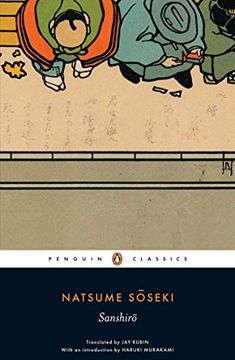
Natsume Soseki's only coming-of-age novel, Sanshiro depicts the eponymous twenty-three-year-old protagonist as he leaves the sleepy countryside to attend a university in the constantly moving real world of Tokyo. Baffled and excited by the traffic, the academics, and-most of all-the women, Sanshiro must find his way among the sophisticates that fill his new life. An incisive social and cultural commentary, Sanshiro is also a subtle portrait of first love, tradition, and modernization, and the idealism of youth against the cynicism of middle age. For more than seventy years, Penguin has been the leading publisher of classic literature in the English-speaking world. With more than 1,700 titles, Penguin Classics represents a global bookshelf of the best works throughout history and across genres and disciplines. Readers trust the series to provide authoritative texts enhanced by introductions and notes by distinguished scholars and contemporary authors, as well as up-to-date translations by award-winning translators.
(1867-1916) Nació en Tokio. Tras realizar los estudios universitarios, ejerció como profesor en varias ciudades de su país. Amplió estudios en Londres y en 1903 le fue confiada la cátedra de literatura inglesa en la Universidad Imperial de la capital japonesa. En 1907 renunció a la enseñanza universitaria para dedicarse exclusivamente a la producción literaria. Hechicero de la prosa japonesa e iniciador de un nuevo estilo de novela, es una figura emblemática de la literatura japonesa moderna e iniciador de una corriente literaria que continuaron ilustres escritores de diversas escuelas más próximas a nuestros días. El trasfondo ideológico de sus obras ha suscitado el interés de estudiosos japoneses y extranjeros. La armonía de su exquisito lirismo y su perspicaz análisis de la realidad humana han tenido siempre un peculiar atractivo para el público japonés. Soseki es la encarnación de una época de transición violenta, donde el orden de los valores tradicionales choca con el de los modernos valores occidentales cuya fuerza es imaparable. Entre sus obras se encuentran ensayos, poesías y, sobre todo, novelas. Son especialmente representativas, además de «Yo, el gato», «Botchan» («El joven mimado»), «Gubijinso» («Amapola»), «Sanshiro», «Kusamokura» («La almohada de hierba»), «Kokoro» («Corazón»), «Sorekara» («Después»), «Tabibito» («El caminante»), «Mon» («La puerta») y «Meian» («Claroscuro»), que dejó incompleta en noviembre de 1916, poco antes de su muerte.
(Kyoto, 1949) is one of the few Japanese authors who have made the leap from prestigious writer to best-selling author worldwide. He has received numerous awards, including the Noma, the Tanizaki, the Yomiuri, the Franz Kafka, the Jerusalem Prize, and the Hans Christian Andersen, and his name is repeatedly mentioned as a candidate for the Nobel Prize in Literature. In Spain, he has earned the Archbishop Juan de San Clemente Award, the Order of Arts and Letters, awarded by the Spanish Government, the International Catalonia Prize 2011, and the Princess of Asturias Award for Literature 2023. Additionally, he is a marathon runner, triathlete, music lover, adores kittens, and greatly enjoys American literature.