你好! Shipping to Taiwan with premium packaging for just NT$300 

Ship to
Taiwan
0
  • argentina
  • chile
  • colombia
  • españa
  • méxico
  • perú
  • estados unidos
  • internacional

Select your country

Americas

Europe

Rest of the world

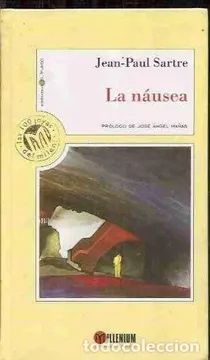
portada La Nausea (in Spanish)
Type
Physical Book
Publisher
Year
1999
Language
Spanish
Pages
192
Format
Paperback
Dimensions
19x12 cm
Weight
1.00
ISBN
9788481301977
ISBN13
9788481301977
Edited in
España
Edition No.
1

La Nausea (in Spanish)

Jean-Paul Sartre (Author) · · Paperback

La Nausea (in Spanish) - Jean-Paul Sartre

Used BookGood Condition Imported to Taiwan
Delivery: 18 Sep - 01 Oct Shipping: 9 to 13 business days.
NT$ 865
(Good Condition)NT$ 865

Synopsis "La Nausea (in Spanish)"

La náusea es la primera novela filosófica del filósofo francés Jean Paul Sartre. Es el resultado de todo el período de su formación, especialmente ligado a su estadía en Alemania (Maison Académique Française de Berlin: 1933-1934), a su discipulado de Edmund Husserl y de la escuela fenomenológica, y, al mismo tiempo, al estudio minucioso, que tanto influyó en él, de lo que hasta ese momento había publicado Martin Heidegger.
Jean-Paul Sartre
  (Author)
View Author's Page
Jean-Paul Sartre (Paris, June 21, 1905 – April 15, 1980) was a French philosopher, novelist, playwright, and political activist, considered the main representative of existentialism and a key figure in twentieth-century thought. He studied at the École Normale Supérieure, where he met Simone de Beauvoir, his lifelong intellectual and romantic partner.

His most influential philosophical work, Being and Nothingness (1943), develops an ontology based on the radical freedom of human beings, proposing that “existence precedes essence,” meaning we are not predetermined and must construct ourselves through our choices. In literature, he stood out with Nausea (1938) and the play No Exit (1944), where he addressed the absurdity of existence and human relationships.

Sartre was also a committed political activist: he participated in the French Resistance during World War II, supported decolonization movements, and was critical of capitalism and totalitarianism. In 1964, he declined the Nobel Prize in Literature, believing that a writer should not be institutionalized.

He died in 1980, leaving a philosophical and literary legacy that continues to influence ethics, politics, and existential theory.
See more
See less

Customers reviews

Frequently Asked Questions about the Book

All books in our catalog are Original.
The book is written in Spanish.
The binding of this edition is Paperback.

Questions and Answers about the Book

Do you have a question about the book? Login to be able to add your own question.

Opinions about Bookdelivery

More customer reviews